Why Are My Complex Dues (Aidat) Increasing? The Truth About Alanya Property Costs
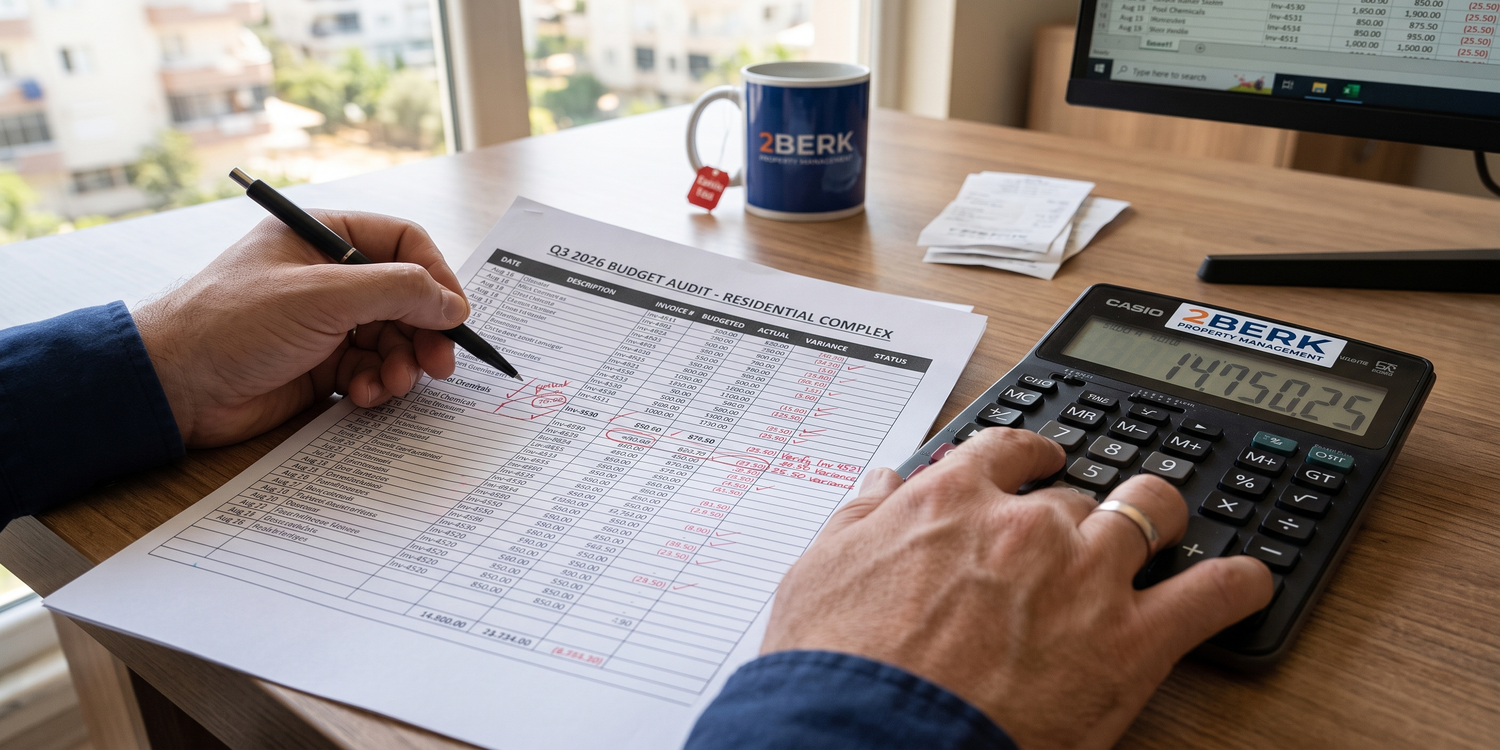
If you own an apartment in Alanya, you have likely seen your monthly complex dues (aidat) increase over the last few years. Many foreign owners immediately blame their management company, assuming they are being overcharged. While poor management certainly wastes money, professional complexes face real economic realities. If your management committee is transparent, an increase in dues means they are legally protecting your complex. Here is exactly why your aidat is increasing. 1. Minimum Wage and SGK Increases The single largest expense for any residential complex is the staff. Whether you have a single caretaker (kapıcı), a team of security guards, or professional cleaners, their salaries are tied to the Turkish national minimum wage. When the government increases the minimum wage, the mandatory social security (SGK) premiums also increase. A professional management company must pay these legal rates; paying staff “under the table” risks massive government fines that the complex owners will ultimately have to pay. 2. The Rising Cost of Electricity Large complexes in Mahmutlar and Oba have extensive amenities. Heating an indoor winter pool, running 24/7 elevators, pumping water to the 10th floor, and illuminating massive garden areas requires significant electricity. Industrial and commercial electricity rates fluctuate, directly impacting the complex’s monthly operating budget. 3. European Standard Maintenance Materials Keeping a pool crystal clear and safe requires industrial-grade chemicals (chlorine, pH balancers). Keeping gardens green requires fertilizers and specialized equipment. Many of these high-quality chemicals and technical parts for elevators and generators are imported, meaning their costs are affected by exchange rates and inflation. How to Tell if Your Aidat is Justified A high aidat is not inherently bad if the money is being spent correctly. The problem is blindly paying. As a property owner, you have the legal right to see the complex’s balance sheets. A professional management company will provide audit-ready financial reports, clearly showing exactly how much was spent on staff SGK, pool chemicals, and utility bills. If your current management cannot provide a clear, line-by-line financial report for last month’s expenses, it is time to call a general assembly and vote for a change. Want a free review of your complex’s budget? Send your current balance sheet to Tuğberk on WhatsApp, and I will tell you if your funds are being managed efficiently.

How to Buy Property in Turkey as a Foreigner: The Complete 2026 Guide

Buying real estate in a foreign country can feel intimidating, but the Turkish government has streamlined the process to make it highly attractive for international investors. If you are considering buying an apartment or villa in Alanya, the process is incredibly fast when guided by professionals. Here is the step-by-step roadmap to securing your Turkish Title Deed (Tapu). Step 1: Property Selection & The Holding Deposit Once you find your ideal property, you will pay a holding deposit (usually around 5% to 10% of the purchase price) to take the property off the market. We will draw up a binding sales contract in both your native language and Turkish, detailing the payment terms, included furniture, and completion dates. Step 2: The Tax Number & Bank Account Before transferring large sums of money, you need a Turkish footprint. Our team will take you to the local tax office to get your free Turkish Tax Number (Vergi Numarası). Immediately after, we will help you open a Turkish bank account, which is essential for transferring your funds and eventually paying your monthly utility bills. Step 3: The Appraisal Report (Ekspertiz Raporu) Turkish law requires an independent appraisal report for any property sold to a foreigner. This protects you from overpaying. A licensed government appraiser will visit the property to assess its true market value. This usually takes 2 to 3 days to complete. Step 4: The Title Deed Transfer (Tapu Devri) Unlike many European countries where closing takes months, the Tapu transfer in Turkey usually happens within a week of the appraisal. Both the buyer and seller (or their legally appointed proxies) meet at the local Land Registry Office (Tapu Dairesi). A sworn translator must be present to ensure you understand every document you are signing. Once signed, the property is officially yours. Important Note for 2026: If you are buying property to apply for a Turkish Residence Permit (İkamet), ensure the property valuation meets the current legal minimum requirements set by the Directorate of Migration Management. Need a trusted partner for your real estate journey? Contact kturkey today, and we will handle every legal step of your purchase from start to finish.

Why Alanya Apartments Get Mold in the Winter (And How to Prevent It)

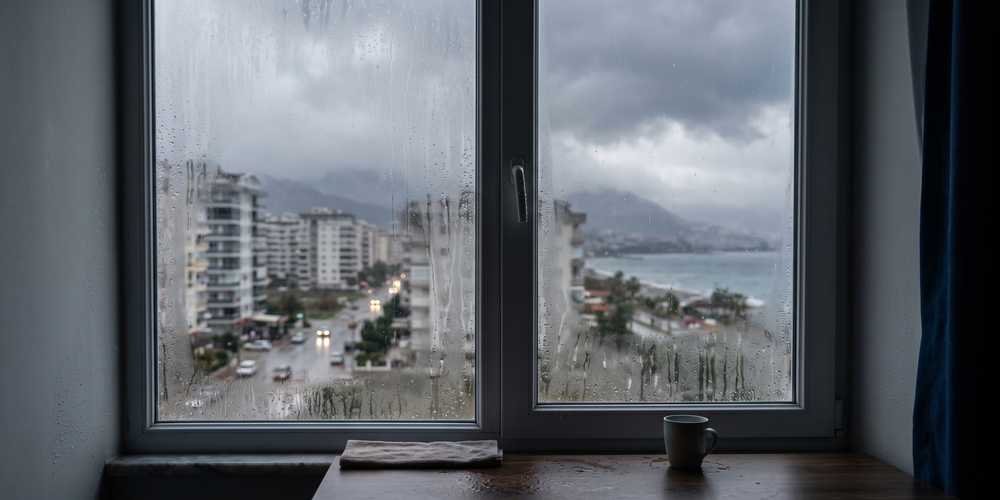
You lock up your beautiful Alanya apartment in October, perfectly clean. You return in May for your summer holiday, open the door, and are hit by a terrible musty smell. The walls have black spots, the bedding feels damp, and the bathroom smells like a sewer. This is the reality of the Mediterranean winter. Here is why it happens to closed apartments, and how to stop it. The Problem: Humidity and Sealed PVC Alanya experiences high humidity and heavy rainfall during the winter months. Modern Turkish apartments are fitted with excellent, tightly sealed PVC windows. While great for insulation, they completely cut off airflow. As the temperature drops outside, the trapped humid air inside your apartment condenses on cold surfaces (especially exterior-facing walls and windows). Without ventilation, this condensation breeds black mold within weeks. The Plumbing Odor Issue Every sink and shower drain in your apartment has a “P-trap” (a U-shaped pipe holding a small amount of water). This water blocks sewer gases from entering your home. If an apartment sits empty for months, that water evaporates. The seal breaks, and toxic, foul-smelling sewer gases fill your apartment. How to Prevent It You cannot leave an apartment completely unmonitored in Alanya for 6 months. Prevention requires two things: My Approach: This is exactly why absent owners hire me for Private Property Management. My team conducts routine physical inspections of your property. We flush the plumbing, air out the rooms, check for winter water leaks, and pay your bills. When you arrive in Alanya, your home is fresh, clean, and ready to enjoy.

Proxy Voting: How Foreign Owners Can Vote in Alanya

Title: Proxy Voting: How Foreign Owners Can Vote in Alanya General Assemblies One of the biggest anxieties for foreign property owners in Alanya is the annual General Assembly. These official meetings dictate the budget and the management for the entire year, but they are typically held in the middle of winter when most foreign owners are back in their home countries. You do not have to be physically present in Türkiye to have a voice. You can protect your investment using a Proxy Vote (Vekaletname). How Proxy Voting Works for Complex Meetings Unlike buying or selling property, you do not need to go to a Notary Public to assign a proxy for a complex meeting. You simply need to fill out a standard Site Proxy Form, sign it, and send a clear scanned copy alongside a copy of your passport. You can assign another owner, a trusted friend, or your property manager to vote on your behalf. The 5% Representation Rule To prevent one person from taking total control of a complex, Turkish law places strict limits on proxy voting: If your complex has 100 apartments, one person can only hold 5 proxy votes. This means committees must be highly organized to collect and distribute proxy votes legally before the meeting begins. My Approach: I believe in total transparency. For the complexes I manage, we organize the proxy distribution well in advance, and we live-stream our General Assemblies. You can watch the meeting, see the financial boards, and know exactly how your proxy was used to protect your property.

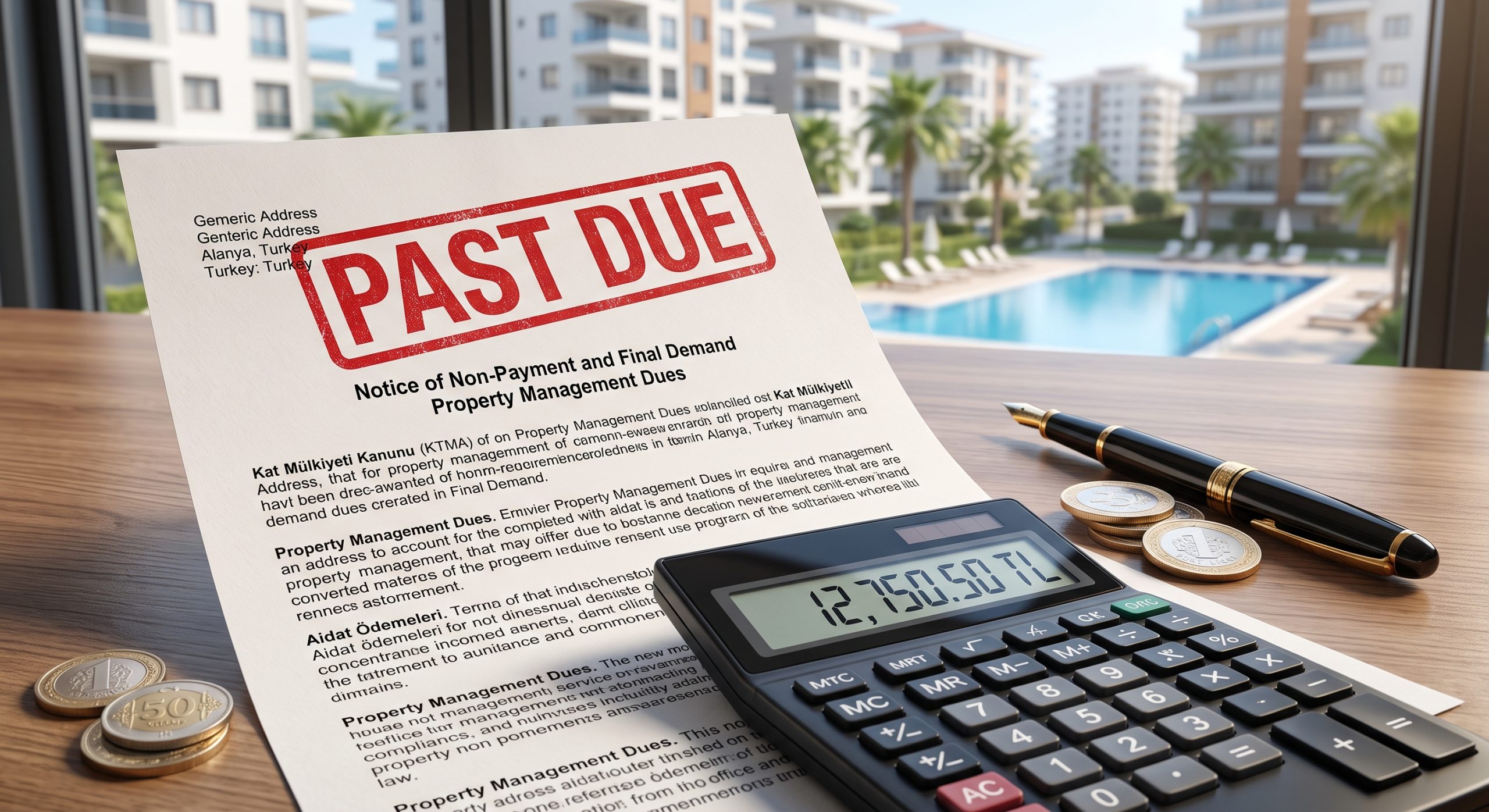
What Happens if an Owner Refuses to Pay Aidat in Turkey?

A residential complex in Alanya is like a small municipality. It relies on monthly dues (aidat) to pay the electric bills, buy pool chemicals, and pay the staff’s salaries. When a few owners refuse to pay, the entire complex suffers. Unfortunately, many amateur management companies simply send polite WhatsApp messages to non-payers, which achieves nothing. Here is exactly how Turkish law handles unpaid dues—and how a professional manager enforces it. The 5% Monthly Delay Penalty of Aidat Under Article 20 of Turkish Condominium Law (Law No. 634), any property owner who fails to pay their monthly dues on time is legally subject to a 5% delay penalty for every month the payment is late. This is not a suggestion; it is a statutory law. Over a year, this adds a massive 60% penalty to the original debt. Legal Execution (İcra Takibi) If an owner ignores the warnings, the complex manager does not need a court order to freeze their assets. We initiate an İcra Takibi (Legal Execution Proceeding) directly through the execution office. Freezing Bank Accounts and Seizing Property for Aidat Once the execution proceeding is active, the state can freeze the non-payer’s Turkish bank accounts. If the debt continues to grow, a lien (haciz) is placed directly on the apartment’s title deed (Tapu). In extreme cases of long-term refusal to pay, the complex can legally force the sale of the apartment to recover the debt. My Approach: Your complex will not go bankrupt because of a few bad neighbors. My legal team actively tracks and recovers unpaid dues. We ensure that the people who pay on time do not subsidize the people who refuse to pay.

How to Legally Change Your Complex Management Company in Türkiye

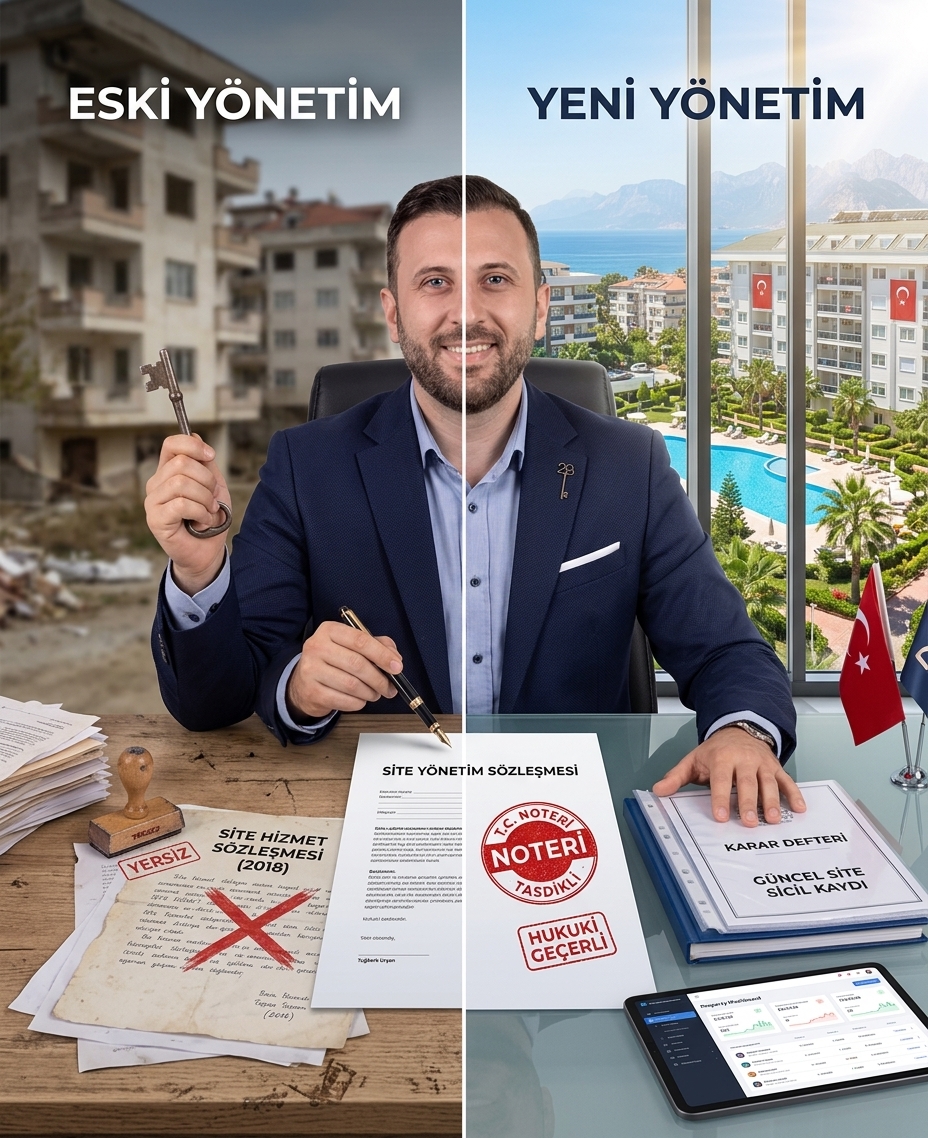
How to Legally Change Your Complex Management Company in Türkiye If you are reading this, you are likely frustrated. The pool is turning green, the elevators are constantly broken, or worse—the management cannot explain where your monthly aidat (dues) is going. Many foreign investors in Alanya feel trapped by poor management companies. However, under Turkish Condominium Law (Kat Mülkiyeti Kanunu No. 634), the property owners hold all the power. Changing your management is a straightforward legal process if you follow the correct steps.   Step 1: Call a General Assembly Management can only be dismissed and appointed by an official vote of the property owners. This happens at a General Assembly (Genel Kurul). You can either wait for the annual meeting (usually held in January or February) or collect signatures from one-third (1/3) of the property owners to force an Extraordinary General Assembly (Olağanüstü Genel Kurul). Step 2: Secure the Majority Vote To officially change the management, you need a majority vote based on both the number of owners and land share. In practical terms, if 51% of the complex owners vote to dismiss the current company and hire a new one, the old management has no legal right to stay. Step 3: The Official Handover (Devir Teslim) This is where unprofessional companies drag their feet, but the law is strict. Once voted out, the old management must hand over: The Notarized Decision Book (Karar Defteri) The Operating Book (İşletme Defteri) Full control of the complex bank accounts All staff SGK (social security) login credentials If they refuse, a simple legal notice from a lawyer forces their hand immediately. My Approach: When a committee votes to hire me, my team handles this entire transition. You do not have to argue with your old manager. We execute the official handover, audit the past accounts, and seamlessly transfer the complex operations.